

Technical background
How polysilicon is produced
Understanding how polysilicon is produced explains why a plant that makes it looks the way it does: reactors, distillation columns, pipe networks built to demanding materials specifications, recovery systems, and substantial electrical infrastructure. This page explains the process in general terms and does not describe the condition or configuration of any specific facility.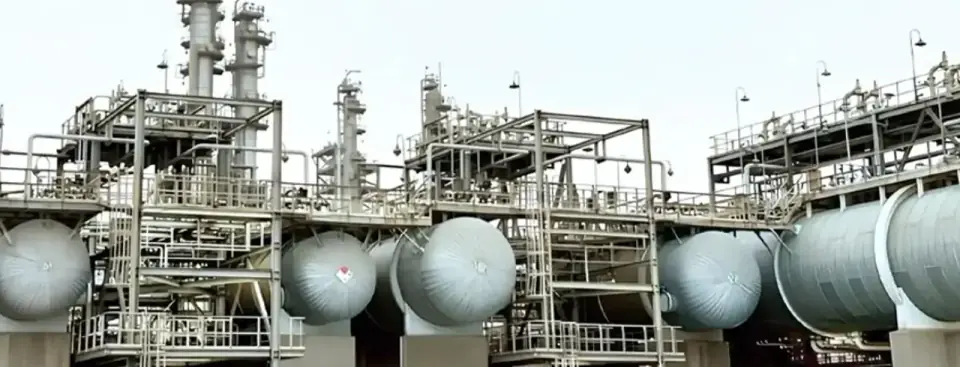
From metallurgical silicon to trichlorosilane
The chain begins with metallurgical silicon, roughly 98–99% pure — adequate for alloys, and nowhere near what solar cells or semiconductors require. To raise purity, the silicon is converted into a gaseous compound that can be purified by distillation, most commonly trichlorosilane, by reacting powdered silicon with hydrogen chloride.
This stage alone explains a large part of what such a facility contains: reactors, heat exchangers, pumps and valves specified for corrosive chemical duty, and handling systems for both solids and gases. None of this is general-service equipment.
Purification by distillation
Distillation is the heart of the process. Trichlorosilane is purified through multiple distillation columns to remove impurities — boron and phosphorus in particular — down to levels measured in parts per billion. The purity grade achieved is what separates solar grade from semiconductor grade, and it is also what makes these columns and their associated equipment a high-value component.
Deposition and recovery
In the Siemens process, purified trichlorosilane is passed with hydrogen into deposition reactors containing thin, electrically heated silicon filaments. The gas decomposes on the hot filament surfaces, depositing high-purity silicon so the rods grow progressively until they are removed as polysilicon rods.
Deposition is electricity-intensive, which explains the scale of the electrical infrastructure at such facilities: transformers, distribution networks and control systems. Unreacted gases and by-products are also recovered and returned to the cycle, which adds an entire layer of recovery, hydrogen compression and filtration systems.
Why this matters to a buyer
Because the value of a polysilicon facility lies not in the count of its equipment but in how it interconnects. Distillation columns without recovery systems, or deposition reactors without the electrical infrastructure that feeds them, lose much of their operational value. That is the reasoning behind offering the asset as a single unit rather than piecemeal.
Different markets. Different requirements.
Solar-grade material is not automatically interchangeable with electronic grade. WACKER’s 2025 results reported very strong performance for hyperpure semiconductor polysilicon alongside lower solar-grade sales volumes. AI growth does not establish a shortage across all polysilicon grades or qualify a particular plant to supply advanced chips.
Power and technical qualification
The IEA’s 2025 Energy and AI report projects data-centre electricity use more than doubling by 2030 in its base case. This informs energy-infrastructure analysis, rather than directly forecasting polysilicon demand. Evaluating the offered asset requires product-purity data, impurity controls, operating records, energy costs and customer qualification requirements before defining its target application.
Market context sources: WACKER · Silicon and wafer production · WACKER · Annual Report 2025 · IEA · Energy and AI (2025)
The information shown is preliminary and non-binding. Specifications, quantities, condition, and availability remain subject to technical inspection, qualification, and relevant agreements.
Related categories
Polysilicon across solar and semiconductor markets: computing, data centres and technical qualification of industrial assets.
View details From enquiry to agreementThe seven stages of acquiring a complete industrial asset in Jubail: qualification, confidentiality agreement, approved data, site inspection, non-binding offer, confirmatory due diligence, and definitive agreements.
View details Jubail Industrial CityWhy the asset's location matters: the Royal Commission for Jubail and Yanbu, industrial utilities, access to King Fahd Industrial Port, and the licensing and foreign investment routes in Saudi Arabia.
View details Restart or relocate?Weighing restart in place against relocation to another jurisdiction: what changes in inspection, cost, timeline and risk when a buyer chooses one route over the other.
View details Frequently asked questionsDirect answers on asset scope, transaction structure, price, specifications, inspection, export, financing, and who qualifies to enquire.
View details