

The process
From enquiry to agreement
Acquiring an industrial asset does not begin with price; it begins with scope. This page sets out the stages Takamol runs between a first enquiry and definitive agreements, and what is required from a qualified party at each one.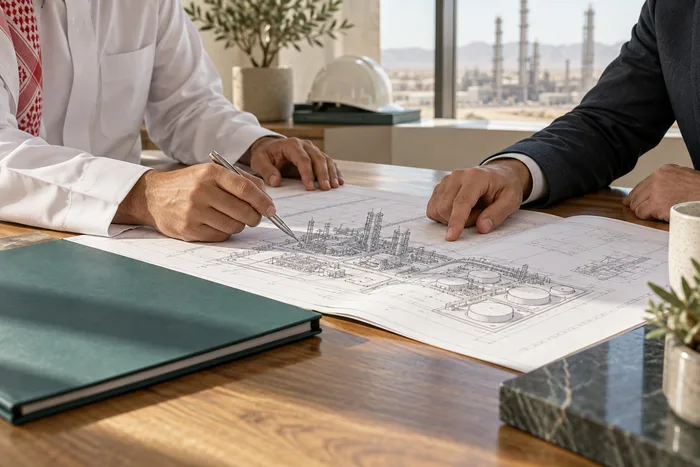
Stages one to three: qualification and disclosure
Stage one begins with an enquiry identifying the entity, its country, the capacity in which the enquirer acts, the commercial purpose and the timeframe. This is not a formality: the level of disclosure is built on it, and the inspection route differs materially between a buyer planning restart and one planning relocation.
Stage two is release of public materials: the asset category directory, field imagery and the 360° virtual tour. Stage three is a confidentiality agreement opening access to approved detailed materials. It is executed with the represented party, or with its advisor on its behalf.
The site inspection
Inspection is where public information becomes technical assessment. A visit to the site in Jubail Industrial City is arranged, attended by the buyer's technical advisors. What is examined depends on the route: restart focuses on equipment condition, utility availability and permits; relocation focuses on package boundaries, dismantling constraints and logistics.
The 360° virtual tour is available beforehand for a preliminary remote review, which is useful for narrowing the scope of interest before incurring the cost of sending a technical team.
Offer, diligence and agreements
After inspection a non-binding offer sets out scope, structure and assumptions. Confirmatory due diligence then validates or revises those assumptions, followed by negotiation of definitive agreements. Takamol does not impose a single timetable; the pace is set by the buyer's route and the size of its technical team.
The information shown is preliminary and non-binding. Specifications, quantities, condition, and availability remain subject to technical inspection, qualification, and relevant agreements.
Related categories
Polysilicon across solar and semiconductor markets: computing, data centres and technical qualification of industrial assets.
View details How polysilicon is producedA general explanation of how high-purity polysilicon is produced — from metallurgical silicon through trichlorosilane to deposition — and the equipment categories each stage requires.
View details Jubail Industrial CityWhy the asset's location matters: the Royal Commission for Jubail and Yanbu, industrial utilities, access to King Fahd Industrial Port, and the licensing and foreign investment routes in Saudi Arabia.
View details Restart or relocate?Weighing restart in place against relocation to another jurisdiction: what changes in inspection, cost, timeline and risk when a buyer chooses one route over the other.
View details Frequently asked questionsDirect answers on asset scope, transaction structure, price, specifications, inspection, export, financing, and who qualifies to enquire.
View details